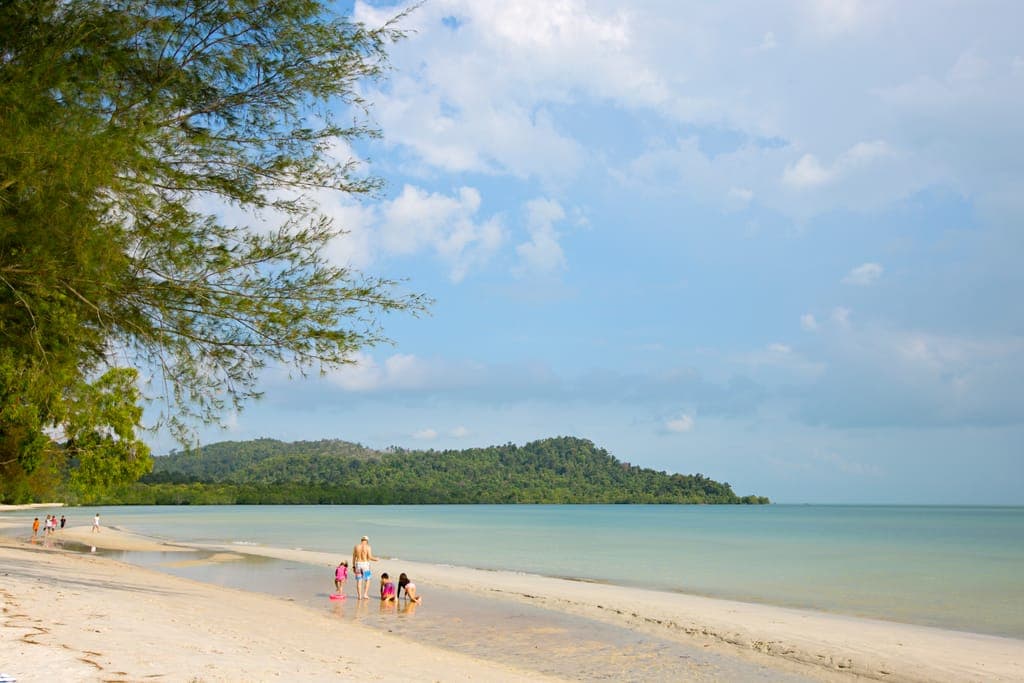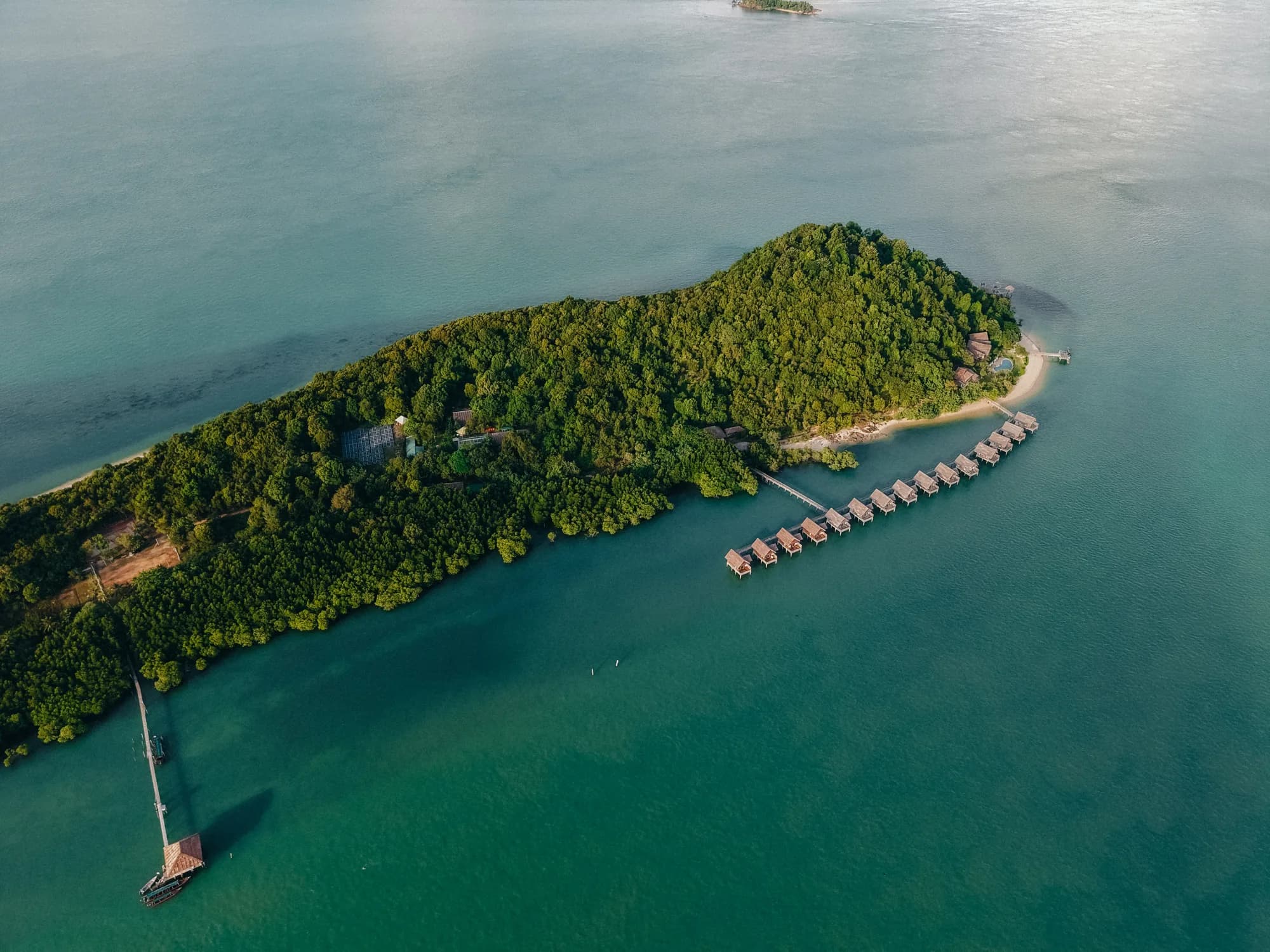



There's no question that the land and seascapes at Telunas Resorts are stunning. But with a keen eye and a little luck, you may also have the opportunity to run into some of our local inhabitants that call this island home.
1. Soldier Crabs
Soldier crabs are some of the tiniest animals found on our Telunas beach, and yet, they are some of the favorites among our guests! These crabs are most commonly seen moving in masses (armies, actually!) along the water's edge, just as the tide is going out. The moist sand of the receding tide is covered in their tiny footprints, making it easy to spot where they have been.
2. Pacific Swallow
One of the most beautiful birds at Telunas also happens to be one of the most common! Without fail, every morning you can see the Pacific swallows lining the railings around the guest bungalows. Though it is easy to find, it is a bit shy, so don't expect to get too close. It is a fast flyer and does its best hunting (insects!) on the wing.
3. Monitor Lizard
This carnivorous, dragon-like reptile is relatively common to see at Telunas, as their dark scales make them easy to spot on our white sand beach. With few predators in our area, monitor lizards happily trudge along the water's edge at low tide, sucking up small crabs. When the tide is high or the conditions are cooler, they are usually spotted lounging in the sun or climbing trees.
4. Onch Slugs
Can you spot the animal? The onch slug is a master of disguise to avoid predators but can be found along the moist rocky areas of the Telunas beach if you look very closely. These are air-breathing marine slugs that feed on algae growing on the rocks. It is believed that many species live only in one small location their entire lives.
5. Carpet Anemone
This isn't just a gooey blob of jelly! The carpet anemone belongs to the jellyfish family and is covered with tiny, sticky tentacles. They tend to stay fairly stationary, waiting for their prey to accidentally walk across them. When a small fish or crustacean touches the tentacles, it gets stung and paralyzed, and the anemone closes up around it.
6. Spotted-wing Fruit Bat
The spotted-wing fruit bat is the smallest of all fruit bats. These little guys are almost always found hanging in tight clusters from the bottoms of palm leaves. They are nocturnal, so you're most likely to spot them at dawn or dusk as they begin their nightly search for fruit.
7. Stork-Billed Kingfisher
The stork-billed kingfisher is one of the reasons you may not need an alarm clock at Telunas. At first breath-taking glance, you might expect a tropical beauty like this to have a more gentle call when she opens her beak. Instead, she tends to produce a more startling and cackly song as she sits on a branch overlooking the water, searching for fish below.
8. Oriental Pied Hornbill
It is always a treat to come across the little family of oriental pied hornbills at Telunas. They are typically spotted first by sound - you might think a monkey or a large chicken was falling through the tree branches. Due to its size and general clumsiness, this hornbill can't hide itself easily. But it makes up for it with its incredible, unmistakable casque.
9. Colugo (Flying Lemur)
Only those with a sharp eye (or a lot of luck!) will have a chance to see the elusive tree-dwelling colugo. They are herbivorous and primarily nocturnal, so a daytime sighting is quite rare. This little guy was so high up in the tree that the photo was taken by a phone camera through a pair of binoculars.
10. Asian Small-clawed Otter
Over the past few decades, the Asian small-clawed otter has become increasingly scarce as pollution and habitat destruction have been on the rise. As a result, this species is now listed as vulnerable and at a high risk of extinction in its native habitat. We are grateful to still have a small family of otters visiting the waters around Telunas.
Andika Uhud Suryo grew up in Central Java, Indonesia, then moved to Bali to attend Bali Tourism Institute and obtain a Bachelor's Degree in Business Hospitality. He is always ready to explore nature and share its stories with guests.